
Description
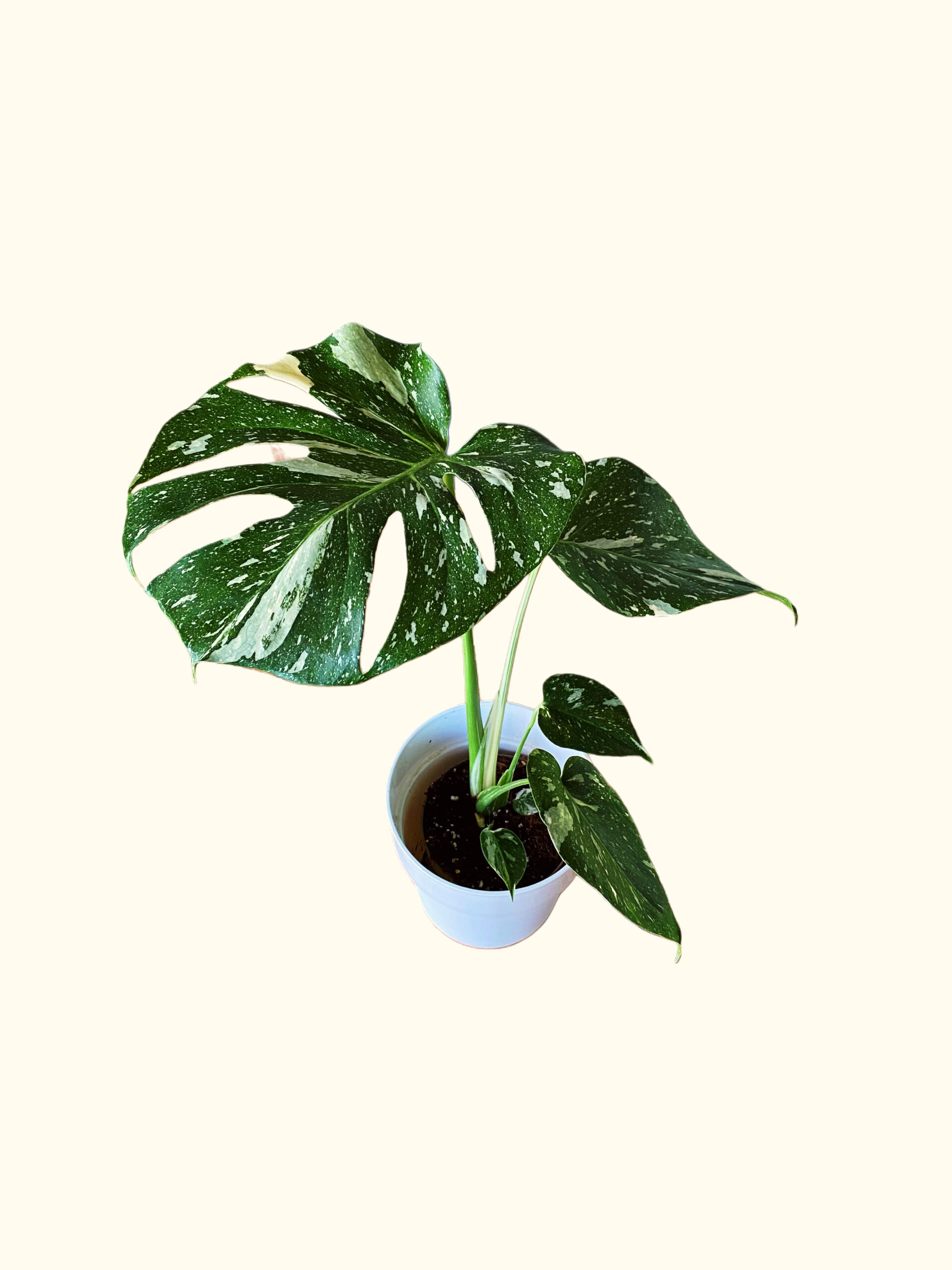
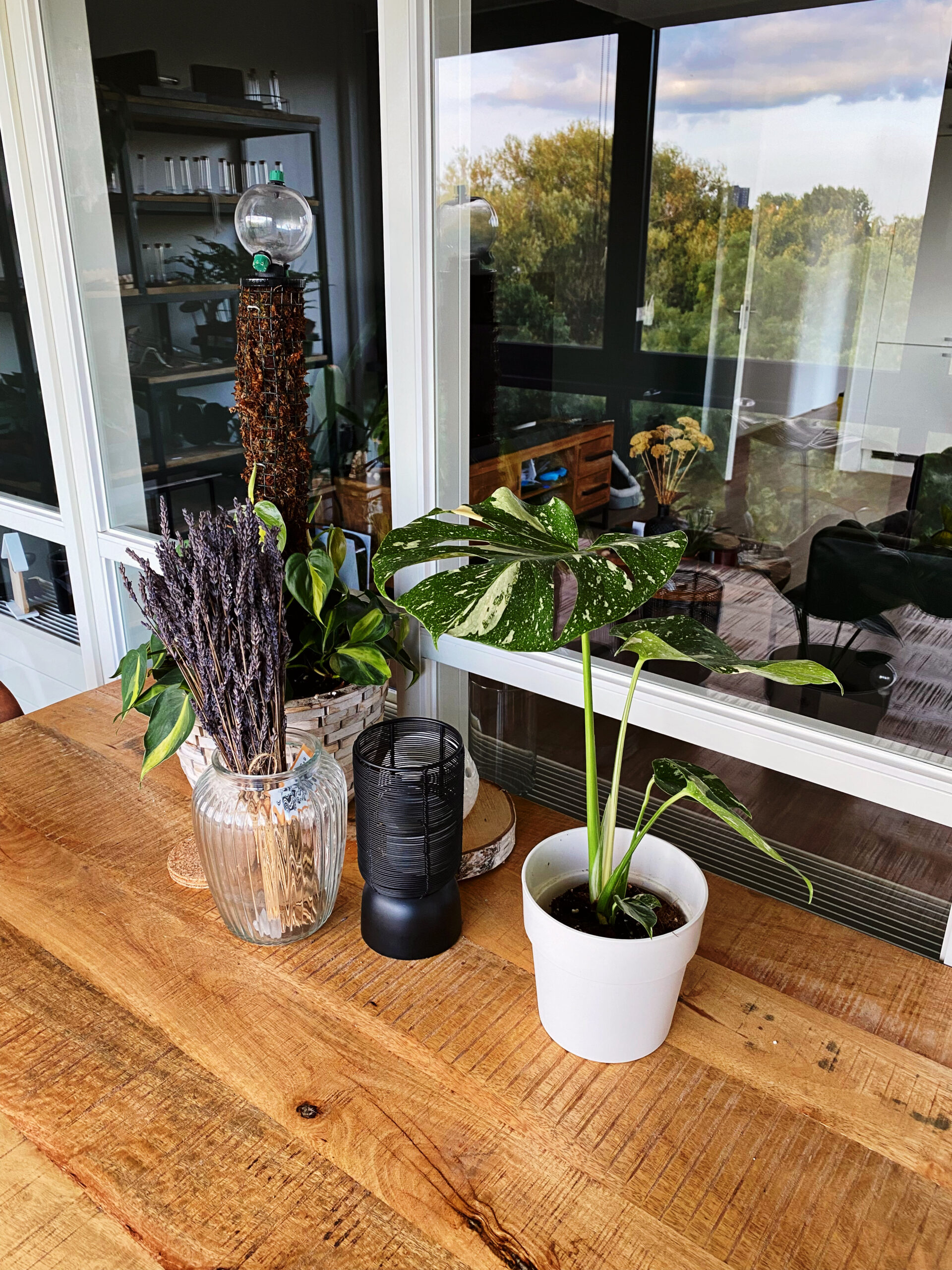
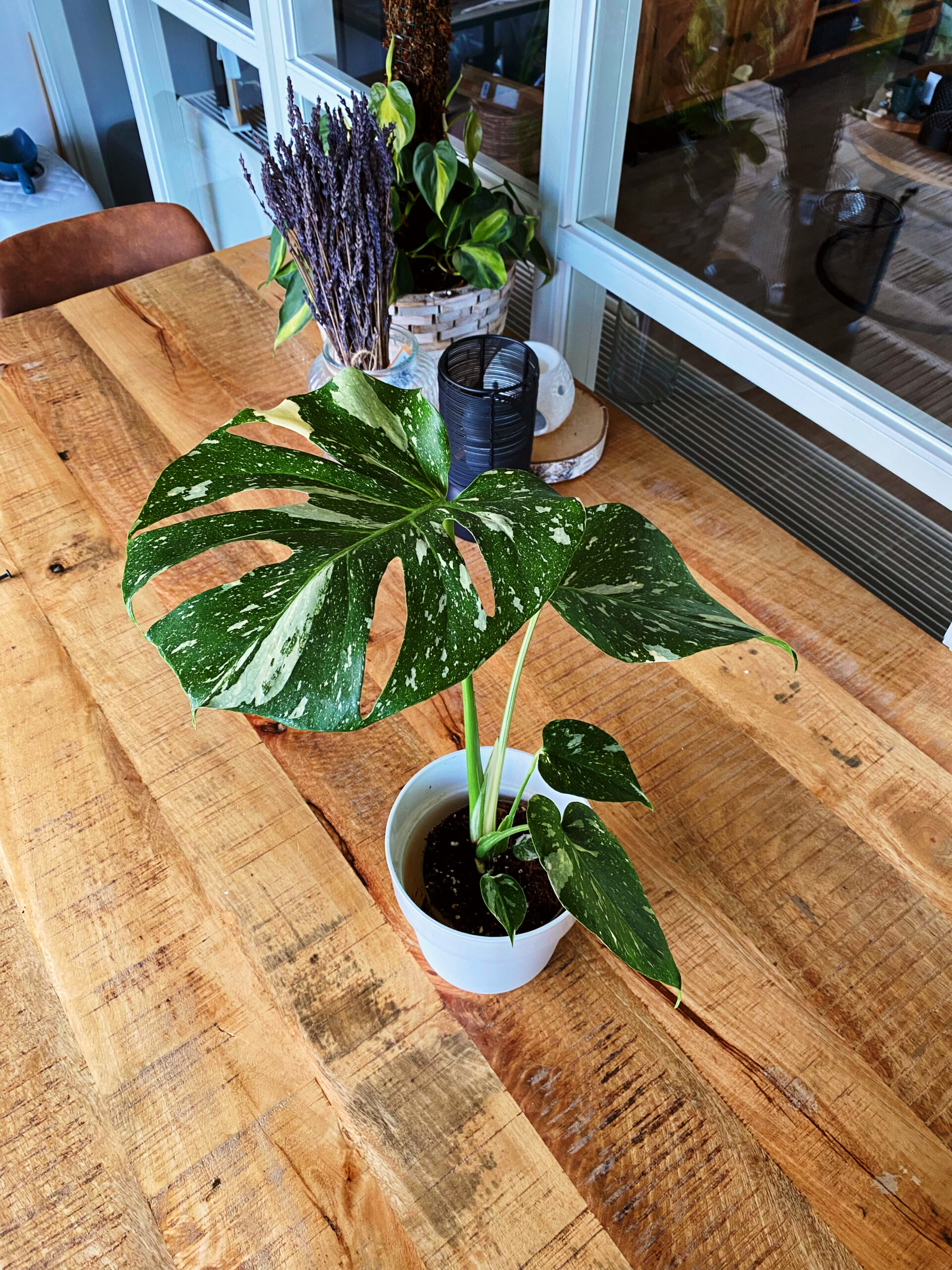
Monstera deliciosa ‘Thai Constellation’ is a rare aroid with stable variegation, displaying creamy marbled patterns across its iconic split leaves—each one resembling a starry night sky. This climbing houseplant combines the bold fenestrations of Monstera deliciosa with unique, long-lasting variegated foliage, making every plant one of a kind. In bright, indirect light, it grows vigorously and becomes a true statement piece in any modern interior. Every specimen is hand-selected for quality, so you receive a strong, healthy plant ready to develop larger fenestrations and long-term growth.
Size
Medium – approx. 45 cm tall, delivered in a 12 cm nursery pot.
Growth & support with moss pole
Thai Constellation is a climbing hemiepiphyte that develops strong aerial roots. Add a moss pole once the plant has 4–5 mature leaves and active aerial roots at the nodes. Growth speed is moderate (often slightly slower than fully green deliciosa), but with vertical support and high humidity the leaves will develop deeper splits and holes much faster. Gently secure shoots to the pole and keep the moss column lightly moist to encourage active attachment and larger leaf growth.
Propagation of Monstera deliciosa ‘Thai Constellation’
Propagation is possible through internodal or top cuttings with at least one growth node and aerial root. Use a covered propagation pot with lightly moist sphagnum moss for stable humidity, or root in water using a glass vial such as the propagation stations from PlantStuff. Repot into an airy aroid mix once roots are 3–5 cm long and branching. Difficulty: medium.
Care & characteristics
- Name: Monstera deliciosa ‘Thai Constellation’
- Family: Araceae
- Tissue-cultured cultivar of M. deliciosa (not a hybrid)
- Habitat: Hemiepiphyte from tropical rainforest
- Preferred temperature: 18–30 °C; tolerates short dips below 15 °C
- Ideal placement: Bright, indirect light; avoid harsh midday sun
- Soil: Airy aroid mix; e.g. PlantStuff Aroid soil
- Water & fertilization: Water when the top 2–3 cm of soil is dry; lightly fertilize every 2–4 weeks during the growing season
- Pruning & maintenance: Remove old or yellowing leaves, keep foliage dust-free; repot every 12–18 months.
- Growth habit: Moderate; produces larger fenestrations with vertical support and sufficient light
- Toxicity: Mildly toxic if ingested (calcium oxalates); keep out of reach of small children and pets
- Special care: Maintain humidity at 50–70%, water evenly, and avoid direct hot sun to prevent burn on variegated leaves





&url=https://getplantstuff.com/en/product/anthurium-hybrid-1/&media=https://getplantstuff.com/wp-content/uploads/2025/09/Anthurium-hybrid-1-1-768x1024.jpg)


&url=https://getplantstuff.com/en/product/mosspole50cm-stackable/&media=https://getplantstuff.com/wp-content/uploads/2023/04/polefront-bg-50cm-819x1024.jpg)
Reviews
There are no reviews yet.